
Translating....
When Artists Make Art, They Shouldn't Question
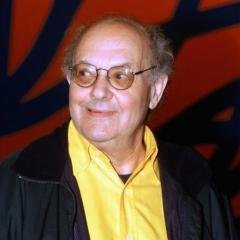
When artists make art, they shouldn't question whether it is permissible to do one thing or another.
Cite this Page
Prevent plagiarism by providing proper attribution.Embed this Quote
Copy this HTML code to embed the quote on your website or blog.Quote Context & Analysis
The Meaning
Sol LeWitt's assertion is a powerful manifesto for uninhibited artistic freedom and radical experimentation. At its core, the quote champions the artist's right, and indeed, imperative, to pursue creative impulses without self-censorship or external validation of methods, materials, or concepts. It rejects the notion of a predefined aesthetic or conceptual "rulebook" that dictates what constitutes legitimate art or acceptable practice. Instead, it posits that the creative act itself is an inherent justification; the artist's role is not to seek permission but to explore, innovate, and challenge boundaries. This statement encourages a fearless embrace of the new, the unconventional, and even the controversial, prioritizing the integrity of the artistic vision over societal expectations, market demands, or historical precedents. It's a call to bypass the gatekeepers, both internal and external, and to engage directly with the potentiality of art-making.
Historical Context
This quote emanates from the fertile ground of the late 1960s and early 1970s, a pivotal era in art history marked by the ascendancy of Minimalism and, more significantly for LeWitt, Conceptual Art. Sol LeWitt (1928–2007) was not only a pioneering artist but also a crucial theoretician of these movements. His seminal texts, such as "Paragraphs on Conceptual Art" (1967) and "Sentences on Conceptual Art" (1969), outlined a radical departure from the prevailing aesthetic concerns of Abstract Expressionism and even Pop Art. He advocated for art where the "idea or concept is the most important aspect of the work," often relegating the physical execution to a secondary role, sometimes even to assistants. His life situation at the time involved actively creating groundbreaking wall drawings and structures based on predetermined systems, while simultaneously articulating the philosophical underpinnings of an art that emphasized dematerialization, seriality, and intellectual rigor over subjective expression, craft, or emotional content. The quote reflects a direct challenge to the established art world's often conservative criteria for judgment and patronage, a world that frequently dismissed non-traditional forms as "not art." LeWitt and his contemporaries were not seeking to fit within existing paradigms; they were creating entirely new ones, and this required a complete disregard for traditional notions of artistic permissibility.
Modern Application
LeWitt's wisdom transcends the art studio, offering profound insights applicable to modern life, leadership, and business. In an era of rapid change and unprecedented complexity, the imperative to "not question whether it is permissible" translates directly to fostering innovation and resilience. For leaders, this means cultivating an environment where experimentation is encouraged, and failure is viewed as a learning opportunity rather than a punitive outcome. It's about empowering teams to challenge the status quo, to think "outside the box," and to pursue novel solutions without the stifling fear of rejection or adherence to outdated protocols. In business, this principle drives disruptive innovation: companies that succeed often do so by daring to create products, services, or business models that were previously deemed "impermissible" or impossible by industry norms. For individuals, it encourages personal agency and creative problem-solving; it's about giving oneself permission to explore new ideas, learn new skills, or pivot careers without self-imposed limitations derived from societal expectations or past failures. Embracing this philosophy means prioritizing curiosity and courage over comfort and convention, allowing for genuine breakthroughs that might otherwise be stifled by a cautious, permission-seeking mindset.


