
Translating....
My Capital Budget Maintains My Commitment To
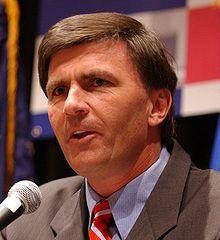
My capital budget maintains my commitment to the education of children, health of the chesapeake bay, and safety of all maryland citizens. we will continue to focus on the five pillars of my administration as we build today and look forward to the projects of the future.
Cite this Page
Prevent plagiarism by providing proper attribution.Embed this Quote
Copy this HTML code to embed the quote on your website or blog.Quote Context & Analysis
The Meaning
This statement by Bob Ehrlich, then Governor of Maryland, is a potent articulation of governmental responsibility and strategic fiscal management. At its core, it emphasizes the direct link between a state's capital budget – the allocation of funds for long-term investments in infrastructure and major projects – and the core values and commitments of its leadership. Ehrlich explicitly frames these commitments around three fundamental pillars: the education of children, the health of the Chesapeake Bay, and the safety of all citizens. These represent human capital development, environmental stewardship, and public welfare, respectively – areas universally recognized as primary functions of a modern state. Furthermore, the mention of "five pillars of my administration" signifies a structured, programmatic approach to governance, suggesting a comprehensive strategic framework guiding present actions and future aspirations. It is a declaration that fiscal decisions are not merely transactional but are profound reflections of political philosophy, societal priorities, and a forward-looking vision for the state's development and prosperity.
Historical Context
Robert L. Ehrlich Jr. served as the 60th Governor of Maryland from 2003 to 2007. As a Republican in a predominantly Democratic state, his administration was often characterized by efforts to balance traditional conservative fiscal principles with the liberal social and environmental priorities of Maryland's populace. This quote would have been uttered during his tenure as governor, most likely in the context of a budget address, a press conference announcing capital projects, or a State of the State speech. During this period, Maryland faced typical gubernatorial challenges including infrastructure needs, educational funding demands, and persistent environmental concerns, particularly regarding the health of the Chesapeake Bay – a natural resource of immense ecological and economic importance to the state, and a perennial political issue. Ehrlich’s emphasis on these specific areas reflects not only his administrative priorities but also an understanding of the critical issues salient to Maryland voters and stakeholders at the time. His "five pillars" would have been the guiding principles of his governorship, communicated to provide clarity and coherence to his policy agenda, aimed at demonstrating a stable, predictable, and strategically-driven leadership.
Modern Application
The wisdom embedded in Ehrlich's statement transcends specific political contexts and offers valuable lessons for modern leadership in various domains. In government, it underscores the enduring importance of transparently linking fiscal decisions to fundamental societal values and long-term strategic goals. Leaders must articulate their "pillars" – whether they be sustainability, innovation, equity, or economic growth – and demonstrate how capital allocation directly supports these commitments, fostering public trust and accountability. In the realm of business, this quote resonates with strategic planning and corporate social responsibility. A CEO, for instance, must communicate how the company's capital expenditures (R&D, infrastructure, talent development) maintain commitments to employee well-being, environmental impact, or market leadership. The "five pillars" concept translates directly to core business objectives or strategic imperatives, ensuring that current investments build towards future competitiveness and innovation. For any organization, the principle of building "today and looking forward to the projects of the future" highlights the necessity of balancing immediate operational needs with visionary, long-term investments that secure future relevance and growth, emphasizing that a clear, communicated commitment to key priorities is foundational for sustainable success.


